top of page


Filter by Tag:
Development


What Do the Recent Lease Buyouts Mean for Wigi/Humboldt Bay’s Offshore Wind?
California sues the Trump Administration after their latest efforts against offshore wind involving buying back offshore wind leases.
Sep 4


What Does President Trump’s Executive Order Mean for Humboldt Offshore Wind?
On January 20, 2025, President Donald Trump issued a Presidential Memorandum to prevent future leasing of offshore wind energy on the outer continental shelf.
Sep 23, 2025

Why is the North Coast being considered for offshore wind?
The North Coast’s offshore wind resources are world-class, both in their strength and consistency, such that offshore wind turbines located off of our coast could consistently produce an exceptional amount of energy.
Sep 23, 2025


What are the development timelines for the proposed Humboldt offshore wind farm, marine terminal, and associated transmission infrastructure?
Estimated timeline for the Humboldt Bay offshore wind project.
Sep 23, 2025


Where would the Humboldt wind farms be located, and how many turbines would there be?
The Humboldt Wind Energy Area (WEA) is located 20–29 miles off the coast of Wigi/Humboldt Bay, and comprises 132,352 acres, or 206.8 square miles. Exactly how many turbines would be placed in this space has not yet been decided by the developers and regulators, partially due to the region’s uncertain future electrical transmission capacity.
Sep 23, 2025


What is Central Procurement and Why Is It Being Used for Offshore Wind in California?
In 2023, Governor Newsom signed AB 1373 into law. The goal of the bill was to support the development of offshore wind (and other clean electricity resources including geothermal and multi-day long duration energy storage like batteries) by solving a market issue.
Sep 23, 2025


Who is developing the proposed Humboldt offshore wind project?
The two lease areas in the Humboldt Wind Energy Area (WEA) were provisionally leased by two private companies through the U.S. Bureau of Ocean Energy Management (BOEM)’s lease auction in December 2022. BOEM, an agency within the U.S. Department of the Interior, is regulating the development activities because the offshore wind projects would be built in the federal water of the Pacific Outer Continental Shelf (OCS-P).
Sep 23, 2025


Would Humboldt offshore wind development reduce costs for ratepayers?
The Schatz Energy Research Center at Cal Poly Humboldt analyzed the cost of offshore wind transmission and found that it could result in substantial savings to ratepayers.
Sep 23, 2025


Would North Coast residents receive electricity from local offshore wind development?
The proposed new 500/115-kilovolt (kV) transformer and approximately 6-mile line connecting offshore wind energy to the local Humboldt Bay grid means that electricity generated by offshore wind would directly benefit residents around Wigi/Humboldt Bay and those directly connected to the local Humboldt Bay electric grid.
Sep 23, 2025


How would the environmental impacts of the proposed Humboldt offshore wind farm be evaluated and mitigated?
The U.S. Bureau of Ocean Energy Management (BOEM) is the lead agency for environmental review of offshore wind. BOEM has developed an environmental review process that takes nearly a decade.
Sep 23, 2025


What is an offshore wind heavy lift marine terminal, and what is its purpose?
The Humboldt Bay Offshore Wind Heavy Lift Marine Terminal Project is a plan proposed by the Humboldt Bay Harbor, Recreation & Conservation District (Harbor District) to develop Redwood Marine Terminal One — a site located just north of the old pulp mill near the town of Samoa on Wigi/Humboldt Bay’s Samoa Peninsula — into a new terminal specifically to facilitate offshore wind development.
Sep 23, 2025


How new is floating offshore wind energy technology?
Floating offshore wind energy technology is relatively new, with the first commercial floating offshore wind project in the world becoming operational off the coast of Scotland in 2017.
Sep 23, 2025


How much would the Humboldt offshore wind project cost to develop, build, and operate? Who would pay/is paying for it?
Offshore wind, and particularly floating offshore wind, is a relatively new technology with higher costs than some other more established energy sources — as much as $133 per megawatt hour (MWh), according to a recent federal analysis, compared to $78 per MWh for fixed-bottom offshore wind, and $34 per MWh for land-based wind.
Sep 23, 2025


What Is a Green Terminal Strategy and Why Do We Need One?
In May 2023, local environmental activists started a campaign to ask for the Humboldt Bay Offshore Wind Multipurpose Heavy Lift Terminal to be a zero-emission or “green” port. The Humboldt Bay Harbor, Recreation, and Conservation District adopted Resolution 2024-01, committing to the development and adoption of a Green Terminal Strategy for its Heavy Lift Multipurpose Terminal.
Sep 23, 2025


Why can't we just use less electricity, instead of developing new energy sources such as offshore wind?
Not only do we need to replace existing dirty energy with renewables, but we need even more renewably-generated electricity to offset fossil fuels in newly electrified sectors.
Sep 23, 2025


How would electricity get from the offshore wind turbines to shore?
First, power would flow from each individual wind turbine to a floating offshore substation through an inter-array cable. From the offshore substation, power would flow via an export cable to an onshore substation where it could connect to the wider electric grid.
Sep 23, 2025


What kind of onshore transmission would be necessary to accompany Humboldt offshore wind?
Because Humboldt County's existing transmission infrastructure is extremely limited and insufficient to transmit so much energy to other parts of California, the successful implementation of offshore wind would necessitate the construction of new, larger transmission lines to connect Humboldt with the rest of the State.
Sep 23, 2025


Who is developing the Humboldt Bay Offshore Wind Heavy Lift Marine Terminal?
There is not yet a developer/operator for the Humboldt Bay Offshore Wind Heavy Lift Marine Terminal, which is a project of the Humboldt Bay Harbor, Recreation & Conservation District (Harbor District).
Sep 23, 2025
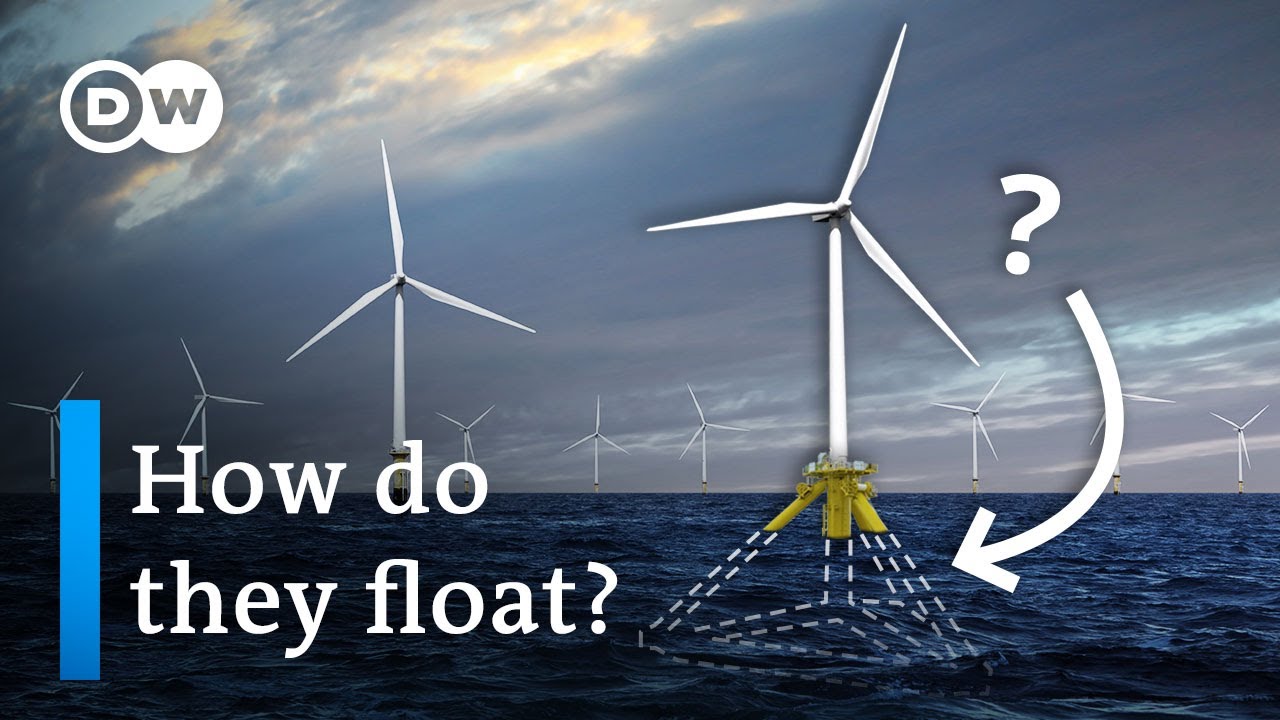
How is the proposed Humboldt offshore wind project different from offshore wind projects on the East Coast?
All of the currently installed offshore wind turbines off the East Coast of the U.S. are fixed-bottom turbines, while the proposed Humboldt offshore wind project would use floating turbines. Compared to floating turbines, fixed-bottom turbines cause different environmental impacts, due to the construction of their foundations in shallow water at sea and their proximity to the shore (11.7 miles on average).
Sep 23, 2025


What site assessment activities will offshore wind developers perform as part of environmental review?
The Bureau of Ocean Energy Management (BOEM), the federal agency in charge of environmental review for offshore wind projects in the U.S. under the National Environmental Policy Act (NEPA), uses an unusual three-part process for environmental review.
Sep 23, 2025
bottom of page