top of page


Filter by Tag:
Engineering


What does port electrification mean and why is it important?
Implementing port electrification for a healthier coast will require a larger energy load on the existing grid & collaboration among a port (or several ports), port tenants, interested community groups, & electric utility companies. Some of the largest ports in the U.S. have solutions.
Sep 23, 2025


Would the proposed Humboldt offshore wind project increase vessel traffic?
The proposed Humboldt offshore wind project would likely increase local vessel traffic. Vessels would bring offshore wind turbine components to the proposed Humboldt Bay Offshore Wind Heavy Lift Marine Terminal Project from around the country and world for final integration. In addition, tow vessels would periodically be towing the completed turbines out to sea for installation and back to the bay for maintenance.
Sep 23, 2025


What are the development timelines for the proposed Humboldt offshore wind farm, marine terminal, and associated transmission infrastructure?
Estimated timeline for the Humboldt Bay offshore wind project.
Sep 23, 2025


What is an offshore wind heavy lift marine terminal, and what is its purpose?
The Humboldt Bay Offshore Wind Heavy Lift Marine Terminal Project is a plan proposed by the Humboldt Bay Harbor, Recreation & Conservation District (Harbor District) to develop Redwood Marine Terminal One — a site located just north of the old pulp mill near the town of Samoa on Wigi/Humboldt Bay’s Samoa Peninsula — into a new terminal specifically to facilitate offshore wind development.
Sep 23, 2025


How much would the Humboldt offshore wind project cost to develop, build, and operate? Who would pay/is paying for it?
Offshore wind, and particularly floating offshore wind, is a relatively new technology with higher costs than some other more established energy sources — as much as $133 per megawatt hour (MWh), according to a recent federal analysis, compared to $78 per MWh for fixed-bottom offshore wind, and $34 per MWh for land-based wind.
Sep 23, 2025


What Is a Green Terminal Strategy and Why Do We Need One?
In May 2023, local environmental activists started a campaign to ask for the Humboldt Bay Offshore Wind Multipurpose Heavy Lift Terminal to be a zero-emission or “green” port. The Humboldt Bay Harbor, Recreation, and Conservation District adopted Resolution 2024-01, committing to the development and adoption of a Green Terminal Strategy for its Heavy Lift Multipurpose Terminal.
Sep 23, 2025


What happens when wind turbines break?
While wind turbine failures are infrequent, they typically occur in the blade mechanisms. Potential reasons for failure include manufacturing defects, adhesive joint degradation, trailing edge failure, or other specific causes. Most failures do not lead to catastrophic breaks but instead to less efficient power yields.
Sep 23, 2025


How much carbon is used to create an offshore wind turbine? Is it worth it?
Lifecycle emissions analysis (1) of wind turbines typically measures the climate impacts in terms of grams of carbon emitted per kilowatt hour of electricity generated. This allows comparison between the carbon emitted to manufacture a wind turbine with that emitted during fossil fuel-powered electricity generation. Importantly, however, all research agrees that offshore wind power produces considerably less carbon dioxide than almost all other forms of electricity generation
Sep 23, 2025


How sustainable are offshore wind turbines to build, and how long do they last?
Producing the materials required to build an offshore wind turbine does require resources and produce environmental impacts — particularly from steel mining and smelting. However, offshore wind has considerably fewer environmental and climate impacts per watt of energy produced compared to other forms of energy production—fossil fuels in particular.
Sep 23, 2025


Where would new onshore electricity infrastructure be located?
It is highly likely that new transmission lines will follow the existing right-of-ways for the electrical transmission infrastructure that currently serves Humboldt Bay, since there would be fewer impacts than creating new right-of-ways. If existing right-of-ways are followed, depending on the design specifics, they may need to be expanded or rerouted in sections to accommodate larger setbacks associated with larger towers and higher capacity transmission lines.
Sep 23, 2025


Why can't we just use less electricity, instead of developing new energy sources such as offshore wind?
Not only do we need to replace existing dirty energy with renewables, but we need even more renewably-generated electricity to offset fossil fuels in newly electrified sectors.
Sep 23, 2025


How would electricity get from the offshore wind turbines to shore?
First, power would flow from each individual wind turbine to a floating offshore substation through an inter-array cable. From the offshore substation, power would flow via an export cable to an onshore substation where it could connect to the wider electric grid.
Sep 23, 2025


What kind of onshore transmission would be necessary to accompany Humboldt offshore wind?
Because Humboldt County's existing transmission infrastructure is extremely limited and insufficient to transmit so much energy to other parts of California, the successful implementation of offshore wind would necessitate the construction of new, larger transmission lines to connect Humboldt with the rest of the State.
Sep 23, 2025


What efforts are being made to Increase sustainability of offshore turbines?
Previously, wind turbine components have been difficult to make sustainable due to the composite materials and resin systems that they require. However, efforts are being made to make the construction and management of wind turbines more sustainable.
Sep 23, 2025


Who is developing the Humboldt Bay Offshore Wind Heavy Lift Marine Terminal?
There is not yet a developer/operator for the Humboldt Bay Offshore Wind Heavy Lift Marine Terminal, which is a project of the Humboldt Bay Harbor, Recreation & Conservation District (Harbor District).
Sep 23, 2025
How is the proposed Humboldt offshore wind project different from offshore wind projects on the East Coast?
All of the currently installed offshore wind turbines off the East Coast of the U.S. are fixed-bottom turbines, while the proposed Humboldt offshore wind project would use floating turbines. Compared to floating turbines, fixed-bottom turbines cause different environmental impacts, due to the construction of their foundations in shallow water at sea and their proximity to the shore (11.7 miles on average).
Sep 23, 2025


What are vertical axis wind turbines (VAWTs)? Would the Humboldt offshore wind project potentially use VAWTs?
Vertical axis wind turbines (VAWTs) are an alternative design to more conventional horizontal axis wind turbines (HAWTs). As their name suggests, VAWTs spin on a vertical axis instead of a horizontal axis. Some of the advantages of VAWTs include that they can operate no matter which direction the wind is blowing, and are quieter than HAWTs.
Sep 23, 2025


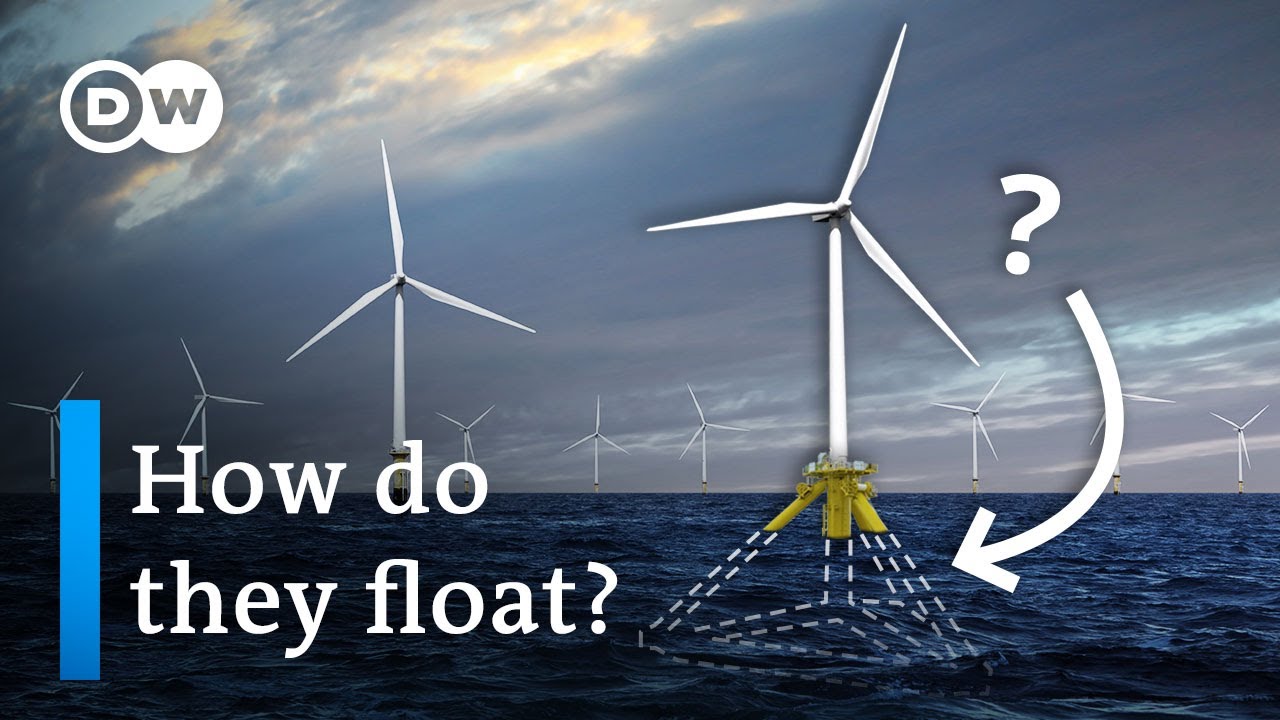
How do such massive turbines float?
Floating offshore wind turbine platforms float using buoyancy, the same way large ships float. They are also specifically designed to remain upright during storms, waves, and other events. Floating turbine platforms are not floating freely in the ocean – rather, they are anchored to the seafloor via mooring lines and anchors.
Sep 23, 2025


How large would the offshore wind turbines be?
Based on the other projects currently planned around the world, each wind turbine would likely stand (or float) at least 900 feet above the ocean’s surface (about 90 stories, or almost as tall as the Eiffel Tower) with a rotor diameter of about 775 feet and a swept area of more than 470,000 square feet (the size of more than eight American football fields).
Sep 23, 2025


Would the Humboldt offshore wind project create new jobs?
Building and operating the Humboldt offshore wind farm would require many different kinds of workers.
Sep 23, 2025
bottom of page