top of page


Filter by Tag:
Humboldt Bay


Would the proposed Humboldt offshore wind project increase vehicle traffic?
Increased employment on the Somoa Peninsula and in the Humnoldt Bay Harbor would likely lead to an increase in vehicle traffic as employees come and go to work.
Sep 23, 2025


Would the proposed Humboldt offshore wind project increase vessel traffic?
The proposed Humboldt offshore wind project would likely increase local vessel traffic. Vessels would bring offshore wind turbine components to the proposed Humboldt Bay Offshore Wind Heavy Lift Marine Terminal Project from around the country and world for final integration. In addition, tow vessels would periodically be towing the completed turbines out to sea for installation and back to the bay for maintenance.
Sep 23, 2025


Would the proposed Humboldt offshore wind project replace fossil fuel energy sources in Humboldt County?
Offshore wind would help retire local fossil-fuel power plants that emit air pollution and greenhouse gases.
Sep 23, 2025


How would the proposed Humboldt offshore wind project affect recreation in Wigi/Humboldt Bay?
Increased vessel traffic and the towing of offshore wind turbines in and out of Wigi, aka Humboldt Bay, associated with the proposed Humboldt Bay Offshore Wind Heavy Lift Marine Terminal Project on the Samoa Peninsula of Wigi/Humboldt Bay, would likely conflict with some recreational uses in Humboldt Bay.
Sep 23, 2025

Why is the North Coast being considered for offshore wind?
The North Coast’s offshore wind resources are world-class, both in their strength and consistency, such that offshore wind turbines located off of our coast could consistently produce an exceptional amount of energy.
Sep 23, 2025


Where would the Humboldt wind farms be located, and how many turbines would there be?
The Humboldt Wind Energy Area (WEA) is located 20–29 miles off the coast of Wigi/Humboldt Bay, and comprises 132,352 acres, or 206.8 square miles. Exactly how many turbines would be placed in this space has not yet been decided by the developers and regulators, partially due to the region’s uncertain future electrical transmission capacity.
Sep 23, 2025


Who is developing the proposed Humboldt offshore wind project?
The two lease areas in the Humboldt Wind Energy Area (WEA) were provisionally leased by two private companies through the U.S. Bureau of Ocean Energy Management (BOEM)’s lease auction in December 2022. BOEM, an agency within the U.S. Department of the Interior, is regulating the development activities because the offshore wind projects would be built in the federal water of the Pacific Outer Continental Shelf (OCS-P).
Sep 23, 2025


How much would the Humboldt offshore wind project cost to develop, build, and operate? Who would pay/is paying for it?
Offshore wind, and particularly floating offshore wind, is a relatively new technology with higher costs than some other more established energy sources — as much as $133 per megawatt hour (MWh), according to a recent federal analysis, compared to $78 per MWh for fixed-bottom offshore wind, and $34 per MWh for land-based wind.
Sep 23, 2025


How would the proposed Humboldt offshore wind project affect aquaculture and mariculture in Wigi/Humboldt Bay?
Wigi/Humboldt Bay is home to a thriving aquaculture industry. Oysters and seaweed are farmed in the bay, and the oyster seed industry has exploded in the past decade or so, with many of the "seeds" (tiny oyster) grown on floating docks within or near the proposed Heavy Lift Terminal. The proposed Humboldt Bay Offshore Wind Heavy Lift Marine Terminal Project would likely displace or impact some of these businesses.
Sep 23, 2025


How would the proposed Humboldt offshore wind project affect the bottom of the ocean??
The benthic zone is the bottom or lowest ecological zone in the ocean. Benthic habitats are complex, consisting of a combination of physical, chemical, and biological conditions that are home to a variety of invertebrates and make up the largest single ecosystem on earth. Furthermore, many species of fish rely on the benthic for their food sources.
Sep 23, 2025


How would the proposed Humboldt offshore wind project affect fish and invertebrates?
The main concerns regarding impacts to fish are related to electromagnetic fields (EMFs) and impacts to the upwelling system. There are also potential benefits to fish from the offshore wind farms. On the East Coast, offshore wind turbine platforms are acting as artificial reefs that enhance fish habitat. Some researchers have also theorized that, by reducing fishing, offshore wind farms can also benefit fish species in ways similar to a marine protected area.
Sep 23, 2025


How would the proposed Humboldt offshore wind project affect fishing in and offshore of Wigi/Humboldt Bay?
According to the National Oceanic & Atmospheric Administration (NOAA), the construction and operation of wind turbines could negatively affect commercial, recreational, and Tribal fishing in a variety of ways.
Sep 23, 2025


What kind of onshore transmission would be necessary to accompany Humboldt offshore wind?
Because Humboldt County's existing transmission infrastructure is extremely limited and insufficient to transmit so much energy to other parts of California, the successful implementation of offshore wind would necessitate the construction of new, larger transmission lines to connect Humboldt with the rest of the State.
Sep 23, 2025


Who is developing the Humboldt Bay Offshore Wind Heavy Lift Marine Terminal?
There is not yet a developer/operator for the Humboldt Bay Offshore Wind Heavy Lift Marine Terminal, which is a project of the Humboldt Bay Harbor, Recreation & Conservation District (Harbor District).
Sep 23, 2025
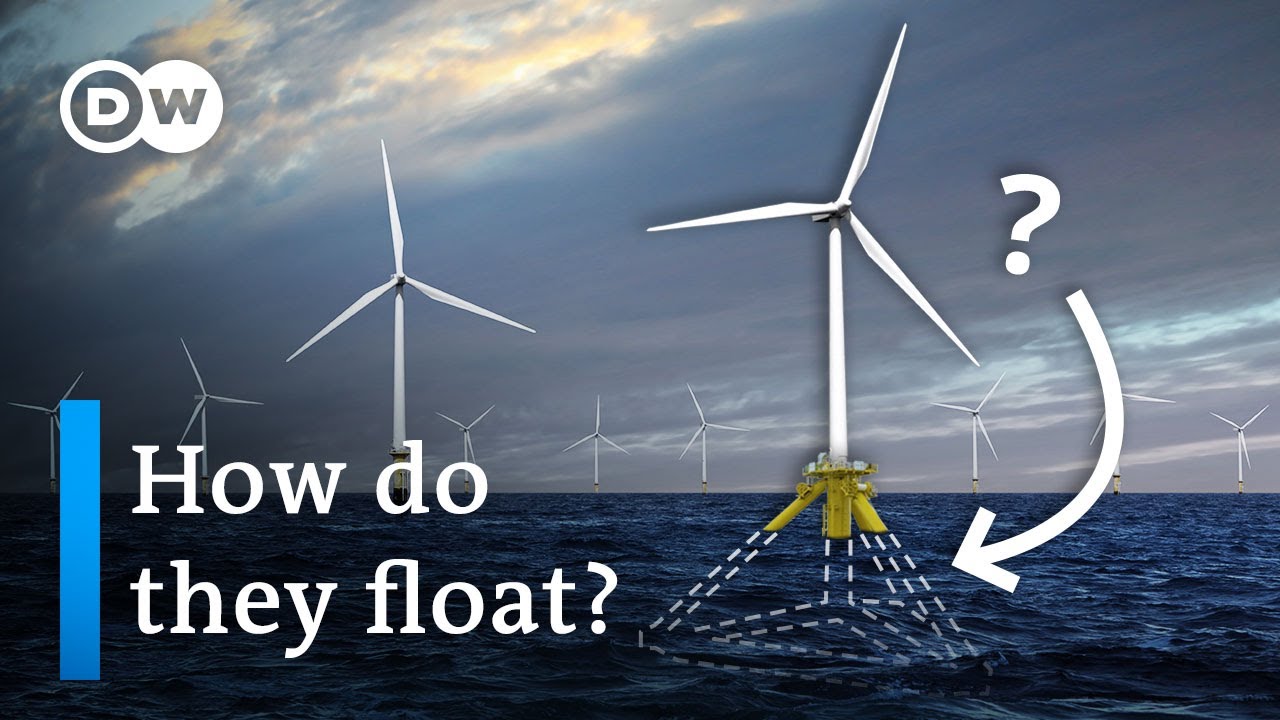
How is the proposed Humboldt offshore wind project different from offshore wind projects on the East Coast?
All of the currently installed offshore wind turbines off the East Coast of the U.S. are fixed-bottom turbines, while the proposed Humboldt offshore wind project would use floating turbines. Compared to floating turbines, fixed-bottom turbines cause different environmental impacts, due to the construction of their foundations in shallow water at sea and their proximity to the shore (11.7 miles on average).
Sep 23, 2025


How would the proposed Humboldt offshore wind infrastructure interact with geological hazards, such as earthquakes and tsunamis?
While floating offshore wind turbines are generally better suited to seismically active locations compared to fixed-bottom offshore wind turbines because of generally greater resilience against the effects of ground shaking, floating offshore infrastructure, let alone its onshore companions, are not at all immune to potential adverse impacts from earthquakes and other geological hazards.
Sep 23, 2025


How would the proposed Humboldt offshore wind project affect whales and other marine mammals?
Potential impacts of offshore wind energy development and operation on whales, seals, and other marine mammals include injury due to physical interactions with associated vessel traffic, entanglement, response to increased underwater noise, displacement from foraging or migratory habitat, and impacts associated with port development and expansion. The potential impacts on different species will vary depending on the location and operation status of OSW development and operat
Sep 23, 2025


How can I learn more about local Tribal perspectives of the proposed Humboldt offshore wind project?
The perspectives of Tribal Nations on offshore wind are not monolithic, and vary by Tribal Government.
Sep 23, 2025


How would the proposed Humboldt offshore wind farm impact Wigi/Humboldt Bay?
Major dredging, light, noise, and air pollution, aquaculture and recreation threats, and a heavy increase in traffic are all risks that threaten Humboldt Bay/Wigi during the construction and operation of the offshore wind farm and terminal.
Sep 23, 2025


How visible would the proposed Humboldt offshore wind farm be from the coast?
Any offshore wind turbines built in the Humboldt Wind Energy Area (WEA) would be more than 20 miles from shore. Once installed in the offshore WEA, any sight of turbines will be obscured by coastal haze on most days, and, on very clear days, the turbines may be visible on the horizon, particularly from high points like Trinidad Head. On clear nights, blinking red lights placed on top of the turbines to keep aircraft safe may be visible.
Sep 23, 2025
bottom of page