


All Posts


What Is a Green Terminal Strategy and Why Do We Need One?
In May 2023, local environmental activists started a campaign to ask for the Humboldt Bay Offshore Wind Multipurpose Heavy Lift Terminal to be a zero-emission or “green” port. The Humboldt Bay Harbor, Recreation, and Conservation District adopted Resolution 2024-01, committing to the development and adoption of a Green Terminal Strategy for its Heavy Lift Multipurpose Terminal.
Sep 23, 2025


What is a Community Benefits Agreement (CBA), and how does it relate to offshore wind?
A Community Benefits Agreement (CBA) is an agreement entered into by a developer and a community to ensure that local community members directly benefit from development in their area and to help address concerns. CBAs have been used for decades in combination with large-scale development and can take many different forms, ranging from funds to support local services to direct investments in infrastructure.
Sep 23, 2025


How would the proposed Humboldt offshore wind project affect the bottom of the ocean??
The benthic zone is the bottom or lowest ecological zone in the ocean. Benthic habitats are complex, consisting of a combination of physical, chemical, and biological conditions that are home to a variety of invertebrates and make up the largest single ecosystem on earth. Furthermore, many species of fish rely on the benthic for their food sources.
Sep 23, 2025


Would the proposed projects impact property values?
Increased economic activity in the greater Humboldt area could feasibly increase property values as the region has more economic activity.
Sep 23, 2025


What happens when wind turbines break?
While wind turbine failures are infrequent, they typically occur in the blade mechanisms. Potential reasons for failure include manufacturing defects, adhesive joint degradation, trailing edge failure, or other specific causes. Most failures do not lead to catastrophic breaks but instead to less efficient power yields.
Sep 23, 2025


What are the potential environmental impacts of the proposed Humboldt offshore wind project?
Compared to traditional fossil fuel-powered forms of energy production, offshore wind produces far fewer carbon emissions and air pollution; however, there are still other potential environmental impacts at different stages of construction and operation.
Sep 23, 2025


How much carbon is used to create an offshore wind turbine? Is it worth it?
Lifecycle emissions analysis (1) of wind turbines typically measures the climate impacts in terms of grams of carbon emitted per kilowatt hour of electricity generated. This allows comparison between the carbon emitted to manufacture a wind turbine with that emitted during fossil fuel-powered electricity generation. Importantly, however, all research agrees that offshore wind power produces considerably less carbon dioxide than almost all other forms of electricity generation
Sep 23, 2025


How would the proposed Humboldt offshore wind project affect fish?
The main concerns regarding impacts to fish are related to electromagnetic fields (EMFs) and impacts to the upwelling system. There are also potential benefits to fish from the offshore wind farms. On the East Coast, offshore wind turbine platforms are acting as artificial reefs that enhance fish habitat. Some researchers have also theorized that, by reducing fishing, offshore wind farms can also benefit fish species in ways similar to a marine protected area.
Sep 23, 2025


What are the potential impacts from electromagnetic fields (EMFs) associated with offshore wind?
Early research by the U.S. Offshore Wind Synthesis of Environmental Effects Research (SEER) project indicates that such effects are minimal: “to date, no impacts interpreted as substantially negative have been observed on electrosensitive or magnetosensitive species after exposure to EMFs from a subsea cable.”
Sep 23, 2025


What are the environmental impacts of offshore wind substations?
Offshore wind turbines positioned more than 30 miles from the shore cannot efficiently transmit the generated power to the onshore grid without significant power loss. Offshore substations (OSS) are platformed infrastructures built on the sea that convert electrical power allowing for efficient long distance power transmission.
Sep 23, 2025


How would the proposed Humboldt offshore wind project affect fishing in and offshore of Wigi/Humboldt Bay?
According to the National Oceanic & Atmospheric Administration (NOAA), the construction and operation of wind turbines could negatively affect commercial, recreational, and Tribal fishing in a variety of ways.
Sep 23, 2025


How sustainable are offshore wind turbines to build, and how long do they last?
Producing the materials required to build an offshore wind turbine does require resources and produce environmental impacts — particularly from steel mining and smelting. However, offshore wind has considerably fewer environmental and climate impacts per watt of energy produced compared to other forms of energy production—fossil fuels in particular.
Sep 23, 2025


Where would new onshore electricity infrastructure be located?
It is highly likely that new transmission lines will follow the existing right-of-ways for the electrical transmission infrastructure that currently serves Humboldt Bay, since there would be fewer impacts than creating new right-of-ways. If existing right-of-ways are followed, depending on the design specifics, they may need to be expanded or rerouted in sections to accommodate larger setbacks associated with larger towers and higher capacity transmission lines.
Sep 23, 2025


Why can't we just use less electricity, instead of developing new energy sources such as offshore wind?
Not only do we need to replace existing dirty energy with renewables, but we need even more renewably-generated electricity to offset fossil fuels in newly electrified sectors.
Sep 23, 2025


How would electricity get from the offshore wind turbines to shore?
First, power would flow from each individual wind turbine to a floating offshore substation through an inter-array cable. From the offshore substation, power would flow via an export cable to an onshore substation where it could connect to the wider electric grid.
Sep 23, 2025

How does onshore electricity transmission permitting work?
Obtaining federal permitting for onshore electricity transmission is often slow and complex. Navigating this process required multiple federal agencies and regulations, resulting in many delays that imposed significant project impacts. To increase efficiency and make the process more effective, the U.S. Department of Energy released the Coordinated Interagency Transmission Authorizations and Permits Program (CITAP) with the goal of cutting federal permitting average timelines
Sep 23, 2025


What kind of onshore transmission would be necessary to accompany Humboldt offshore wind?
Because Humboldt County's existing transmission infrastructure is extremely limited and insufficient to transmit so much energy to other parts of California, the successful implementation of offshore wind would necessitate the construction of new, larger transmission lines to connect Humboldt with the rest of the State.
Sep 23, 2025


What efforts are being made to Increase sustainability of offshore turbines?
Previously, wind turbine components have been difficult to make sustainable due to the composite materials and resin systems that they require. However, efforts are being made to make the construction and management of wind turbines more sustainable.
Sep 23, 2025


Who is developing the Humboldt Bay Offshore Wind Heavy Lift Marine Terminal?
There is not yet a developer/operator for the Humboldt Bay Offshore Wind Heavy Lift Marine Terminal, which is a project of the Humboldt Bay Harbor, Recreation & Conservation District (Harbor District).
Sep 23, 2025
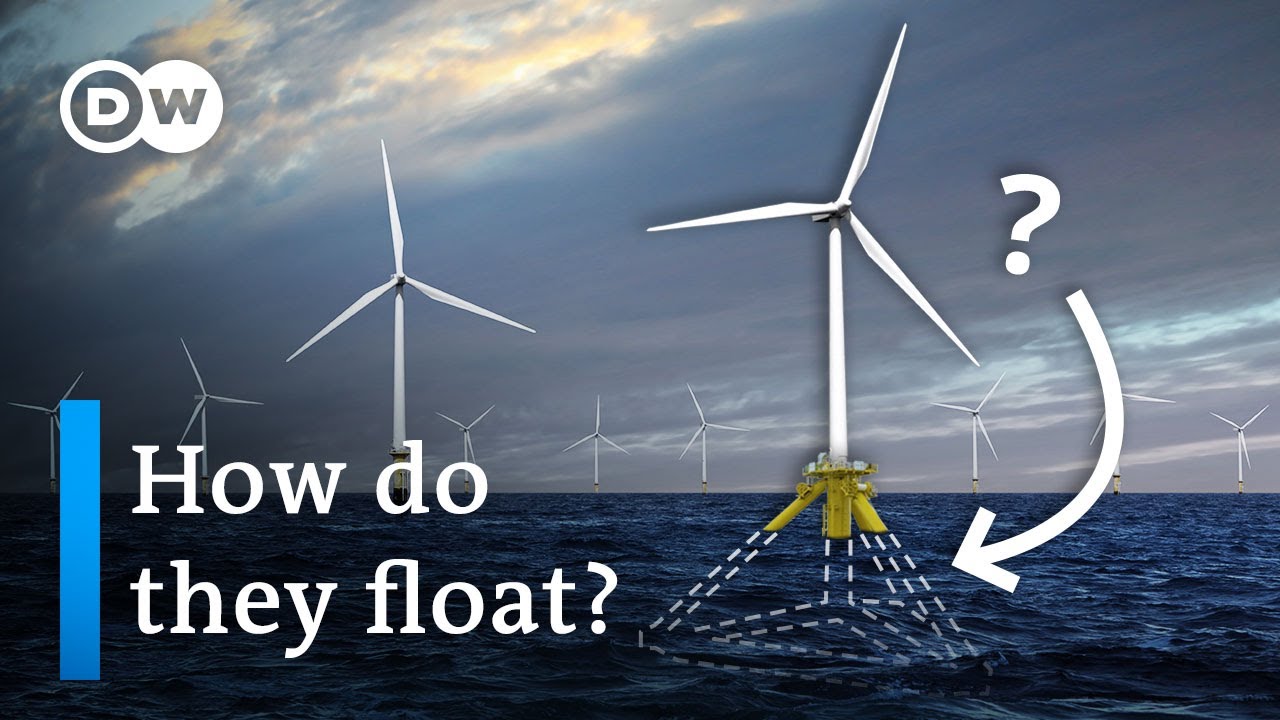
How is the proposed Humboldt offshore wind project different from offshore wind projects on the East Coast?
All of the currently installed offshore wind turbines off the East Coast of the U.S. are fixed-bottom turbines, while the proposed Humboldt offshore wind project would use floating turbines. Compared to floating turbines, fixed-bottom turbines cause different environmental impacts, due to the construction of their foundations in shallow water at sea and their proximity to the shore (11.7 miles on average).
Sep 23, 2025